Dynamic Aerospace Systems
(OTCQB: BRQL)
Executive Order 14307 Ignites Drone Defense Arms Race…
U.S. Drone Company Flying Under the Radar While the Market Opens Up Around It
While Skydio and AeroVironment Dominate the Headlines, This American UAV Maker Is Quietly Gaining Ground
With Hardware Already in Front of the U.S. Air Force, Arizona DPS, and Government Agencies, Wall Street May Not Be Paying Attention Yet
The Chinese drone that powered most of America’s government agencies has just been banned by federal law. The replacement cycle is worth billions. And this Ann Arbor, Michigan, manufacturer is already flying.
While Skydio’s AI drones fill the press releases and AeroVironment’s Switchblade commands Pentagon budgets, a quieter story is building in Ann Arbor, Michigan.
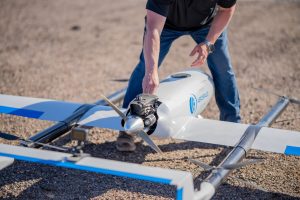
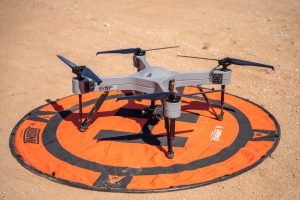
Dynamic Aerospace Systems, OTCQB: BRQL, has already demonstrated its drone platforms to representatives of U.S. Air Force Global Strike Command. It has flown live in front of the Arizona Department of Public Safety. It put hardware in front of the Gilbert, Arizona Fire Department. It submitted a formal proposal to the Department of Defense’s Drone Dominance Rapid Solution Program.
It inked a component supply agreement with Unusual Machines, NYSE: UMAC, a U.S.-based, NYSE-listed American drone components company. And it has done all of this while quietly building a patent portfolio around battery-integrated airframe systems, autonomous delivery infrastructure, modular UAV architectures, tactical UAV systems, swarm-defense concepts, and less-than-lethal deployment capabilities.
This is not a company with a deck and a dream. This is a company with drones in the air, government agencies evaluating them right now, a NYSE-listed supply partner in UMAC, more than $38 million invested over eight years into IP and technology, historical investor backing from Bessemer Venture Partners, Eclipse Ventures, TechNexus, and Alpine 4 Holdings, and a planned NYSE uplisting target for Q3 2026 under the reserved DAS identity.
Meanwhile, the biggest competitor in the U.S. government drone market, the one that supplied the majority of American law enforcement and public safety agencies for years, has just been banned from new U.S. government procurement by federal law.
The door did not just open for American drone makers. Congress kicked it off the hinges.
Hegseth Image from podium:
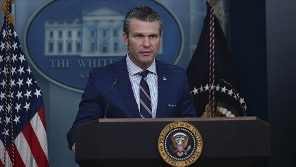
“We will deliver tens of thousands of small drones to our force in 2026, and hundreds of thousands of them by 2027.” – SecDef Pete Hegseth
Investor Highlights: Dynamic Aerospace Systems, OTCQB: BRQL
Before a Drone Company Becomes a Defense Staple, There Is a Moment Like This One
Before AeroVironment was a $1.8 billion NASDAQ company with $400 million in foreign military sales, it was demonstrating unmanned platforms to skeptical agencies and waiting for the procurement cycle to catch up to the technology.
Before Skydio was in 1,000 public safety departments across America, it was an unknown startup flying in front of one police department at a time.
Dynamic Aerospace Systems is at that stage right now. The hardware is proven. The government relationships are forming. The regulatory tailwind is the strongest it has ever been. And the competition just got legislated out of the market.
For people who find these companies before the contracts scale, this is that moment.
The American Drone Market: Why Right Now Matters More Than Ever
The U.S. drone market was valued at $11.54 billion in 2025. It is projected to reach $55.70 billion by 2035, growing at 17% per year, every year, for the next decade.
That growth is being driven by three forces hitting simultaneously.
The Pentagon is all in. The FY2026 National Defense Authorization Act, a $890.6 billion defense budget, the largest in American history, places autonomous unmanned systems at the center of U.S. military modernization. And inside that broader defense push, the drone opportunity is no longer theoretical. According to DAS company materials, the U.S. government has launched a $1.1 billion Drone Dominance initiative designed to scale domestic drone manufacturing, strengthen non-Chinese supply chains, and reduce reliance on foreign-made UAV platforms.
That matters because BRQL is not trying to enter a sleepy category. It is operating directly in one of the fastest-moving procurement priorities in modern defense: American-made unmanned systems, secure supply chains, scalable drone platforms, and mission-ready technology built for defense, public safety, logistics, and emergency response.
BRQL has already submitted a formal proposal to the DoD Drone Dominance Rapid Solution Program. In this market, that puts the company in the conversation at exactly the moment the government is trying to accelerate domestic drone manufacturing.
Public safety cannot wait. Across America’s 18,000 law enforcement agencies and 30,000 fire departments, drones have gone from experimental to essential. They are used for SWAT operations, wildfire mapping, missing-person searches, disaster response, and border surveillance.
These agencies need reliable, domestically sourced platforms. They need them on a budget. And they need them now.
The foreign competition just got banned. This is the structural shift that changes everything.
The DJI Ban: The Most Important Event in American Drone History
For years, DJI, the Chinese manufacturer, supplied the majority of American government drone programs. Cheap, capable, and everywhere.
Then Congress acted.
As of December 23, 2025, DJI and Autel Robotics were added to the FCC Covered List. The American Security Drone Act, fully enforced since December 22, 2025, makes it illegal for any federal agency, federal contractor, or recipient of federal grant funding to procure or operate these platforms.
That is not a future risk. That is current law.
Every police department that used DJI to run search-and-rescue operations. Every fire department that mapped wildfires with a DJI thermal camera. Every border unit that ran surveillance with a DJI platform. Every federally funded program across all 50 states. They all need to replace what they have, and they can only buy American.
The replacement cycle created by this single regulatory action is measured in billions of dollars per year. And the list of credible, NDAA-compliant U.S. manufacturers capable of serving the multi-mission government market is short.
Dynamic Aerospace Systems is on that list, with operational hardware, active government demos, a U.S.-manufactured supply chain, and a DoD program submission already in the pipeline.
What BRQL Has Built and Why It Is Different
BRQL did not build one drone and hope for the best. It built three, each targeting a specific mission gap that no single competitor covers end-to-end.
And this platform was not built overnight.
According to the company’s 2026 deck, more than $38 million has been invested over eight years into DAS intellectual property and technology. The company also has historical investor backing from Bessemer Venture Partners, Eclipse Ventures, TechNexus, and Alpine 4 Holdings.
That matters because DAS is not presenting an idea-stage concept. It is presenting years of engineering investment, multiple UAV platforms, a U.S.-manufactured supply chain, a growing patent portfolio, and hardware that has already been demonstrated to defense and public safety audiences.
The company’s technology portfolio includes battery-integrated airframe systems, autonomous delivery infrastructure, modular UAV architectures, mesh-based delivery networks, tactical UAV systems, swarm-defense concepts, and less-than-lethal deployment capabilities.
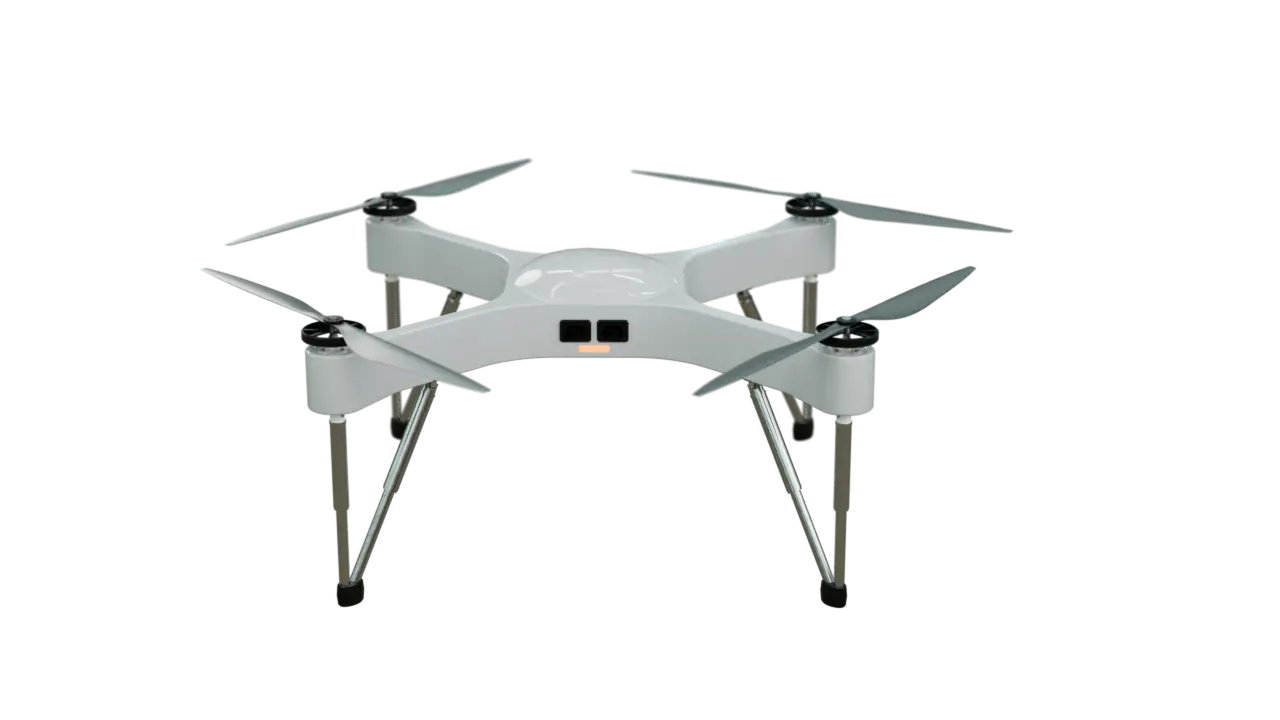
The US-1 MKII: The Endurance Workhorse
Most multi-rotor drones fly for 25 to 35 minutes. The US-1 is designed for extended endurance while carrying mission-ready payloads. That is not an incremental improvement. That is a different category.
Search-and-rescue teams, wildfire crews, and surveillance units do not need a drone that lands every 30 minutes. They need one that stays up.
The US-1 stays up.
The G1 MKII: The Range Monster
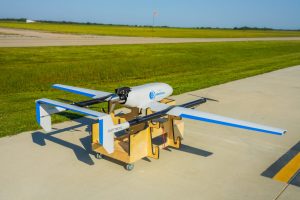
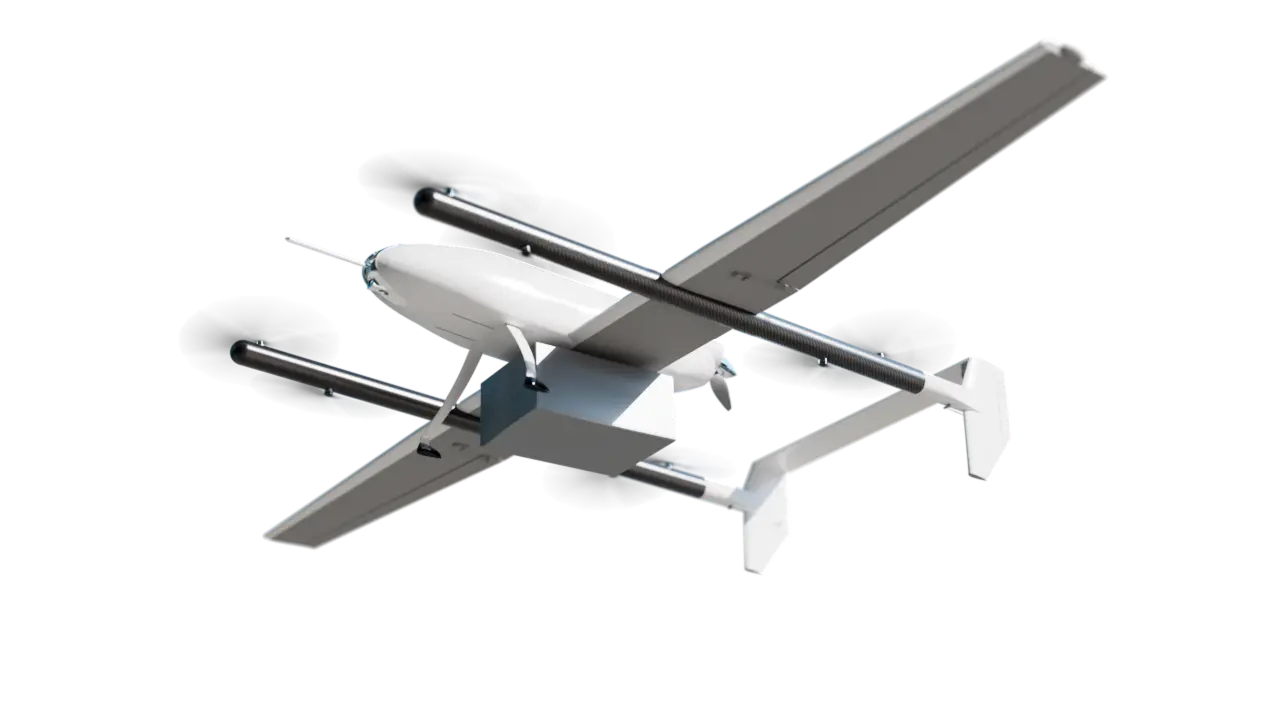
The G1 MKII is a long-range logistics and ISR platform designed around hybrid VTOL capability. It can take off and land vertically, then transition into efficient long-range flight for cargo delivery, wide-area patrol, infrastructure inspection, humanitarian missions, and surveillance.
This is the platform for border monitoring, medical delivery, wide-area operations, and infrastructure coverage across terrain where traditional systems may be too expensive, too limited, or too difficult to deploy.
It is in a class by itself.
The Mitigator MKII: The One Nobody Else Makes
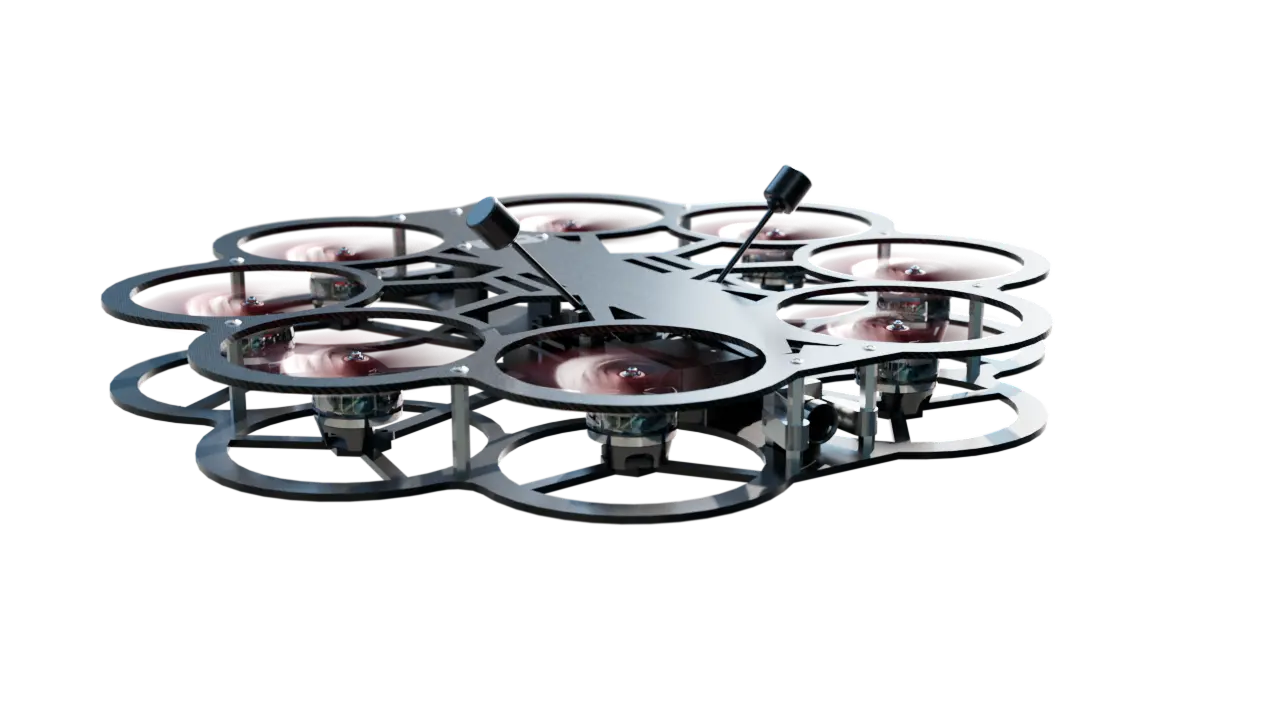
Indoor. Tactical. Built to take a hit.
The Mitigator MKII is designed for close-quarters law enforcement and tactical operations where officers need eyes, access, and options before entering a dangerous structure.
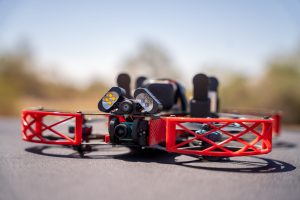
This is not a standard camera drone. According to DAS materials, the Mitigator is built for high-impact reconnaissance in confined and challenging environments. It is designed for indoor operations, reconnaissance, communications, deterrence, and less-than-lethal ordnance deployment.
In practical terms, that means the platform is built for scenarios where a tactical team may need a drone that can enter through a window, recover from impact, pick itself back up, continue operating inside a structure, and deploy a flashbang-style or irritant effect to distract, deter, or help subdue a suspect before officers are forced into direct contact.
Skydio does not make this. AeroVironment does not make this. Nobody else is serving this mission profile from the air.
The IP Nobody Is Talking About
Most investors look at drone companies and see hardware. What they miss is the patent moat being built underneath it.
BRQL now holds a growing patent portfolio, including 9+ provisional patents and 1 issued or published patent. The portfolio covers ground that many drone companies have not even thought to claim.
Structural battery technology is one of the most important pieces of the story. Instead of carrying a separate battery as dead weight, DAS has developed battery-integrated airframe systems that can turn part of the aircraft structure into an energy platform. The structure is no longer just structure. It becomes part of the power system.
More power. Less weight. Longer flight potential.
This is not a software trick. It is an engineering approach that competitors may have to design around.
Beyond structural battery technology, the portfolio covers:
• Mesh-based and modular autonomous delivery networks
• Interceptor and swarm-defense drone systems
• Sealed electronically activated less-than-lethal cartridges for mounted UAS deployment
• Tactical entry UAV systems with onboard electronically activated cartridges
• Propeller thrust-directed airborne dispersion of less-than-lethal and irritant effects
• Dynamic landing on mobile robotic platforms
• Robotic drone capture for continuous package replenishment
• Ejectable battery modules integrated within UAV propulsion arms
This is not a defensive patent library. This is a company actively protecting the next five years of its product roadmap.
The Government Relationships Are Already Real
This is the part that matters most and gets talked about least.
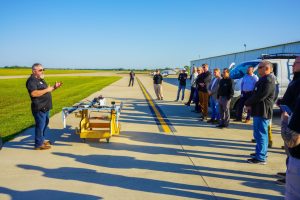
In September 2025, DAS conducted a live demonstration at Strother Field, Kansas, with representatives from U.S. Air Force Global Strike Command in attendance alongside Kansas state departments, local law enforcement, and healthcare systems. Not a trade show. Not a video call. Live hardware, in the air, evaluated by some of the most operationally serious people in American defense.
In November 2025, DAS flew in front of the Gilbert, Arizona Fire Department at the Gilbert Public Safety Training Facility, demonstrating the Mitigator and US-1 platforms in a real operational setting.
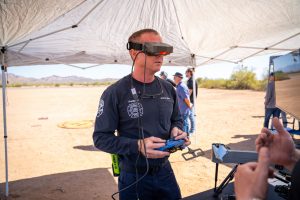
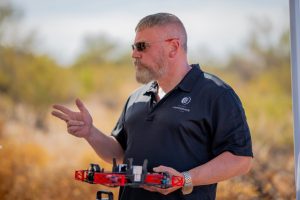
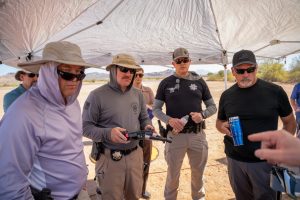
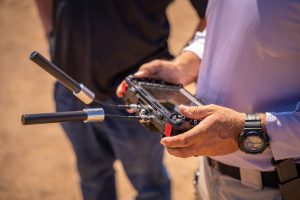
In April 2026, DAS did not just attend a demo event. The Arizona Department of Public Safety co-hosted it. That distinction is everything. When a major state law enforcement agency stakes its institutional credibility on a joint event with a manufacturer, inviting law enforcement, fire, government, and international participants to evaluate the hardware live, they are telling every other agency in the country something important: we believe in this platform enough to put our name on it.
In January 2026, DAS submitted a formal proposal to the Department of Defense Drone Dominance Rapid Solution Program, a competitive DoD initiative specifically designed to fast-track advanced domestic unmanned systems into deployment. The submission is based on the Fortis Class architecture and Sentinel platform.
This is how government procurement actually works. Agencies do not write checks after one meeting. They demonstrate, evaluate, pilot, and then procure. DAS is inside that process across multiple agencies right now.
The Team Behind It
Kent Wilson, CEO, is leading the company through its most critical operational period, from hardware development to government program submissions to NYSE preparation.
Robin Hoops, CFO, brings more than 20 years of experience across accounting, finance, treasury, financial reporting, audit, and senior management. Her mandate is to help get the financials NYSE-ready and build the controls that institutional investors require.
Jorge L. Torres, Board Director, has served as VP of Operations at FedEx Mexico. He has experience with logistics networks, infrastructure development, and expansion. He joined DAS specifically to help guide the company’s logistics and delivery opportunity. This is not a placeholder board seat. It is a strategic appointment from one of the world’s great logistics organizations.
Ron J. Rich, Board Director, brings aerospace industry experience from Honeywell Aerospace, with credibility, regulatory knowledge, and relationships that matter in the government procurement world.
This board was assembled to take DAS to the next level. Not to fill seats.
One Catalyst Is All It Takest
Dynamic Aerospace Systems (BRQL) has done the hard work quietly.
It built the hardware. It filed the patents. It got in front of the Air Force. It co-hosted a demo with state police. It submitted to a DoD rapid procurement program. It locked in a supply agreement with a NYSE-listed American parts maker. It reserved its NYSE identity. It put a planned Q3 2026 uplisting target in motion.
What comes next is the moment that changes the narrative from early-stage to revenue-generating government supplier.
That moment is the first signed procurement contract.
In government aerospace, the first contract is the hardest. Every one after it is easier. Agencies follow other agencies. Procurement officers talk. A win in Arizona gets noticed in Texas, Colorado, and Nevada. A DoD program award gets noticed everywhere.
The pipeline is built. The hardware is proven. The demand is legally mandated.
The question is simply this: how close is the first contract?
Based on what DAS has built in the last 12 months, the answer is closer than the market thinks.
Frequently Asked Questions
What does DAS make?
DAS makes three U.S.-built drone platforms. The US-1 MKII is a long-endurance multirotor platform for military, first responders, surveillance, fire and rescue, law enforcement ISR, infrastructure inspection, and urban logistics. The G1 MKII is a long-range hybrid VTOL logistics and ISR platform. The Mitigator MKII is an indoor tactical UAV built for confined, high-impact environments.
What is the DJI ban?
Federal law now bars every U.S. agency, contractor, and grant recipient from buying Chinese-made drones. DJI owned this market. That is over. Billions in annual procurement now flows only to American manufacturers. DAS is ready.
Has DAS demonstrated to real agencies?
Yes. DAS demonstrated to U.S. Air Force Global Strike Command at Strother Field, Kansas, in September 2025. It demonstrated to the Gilbert, Arizona Fire Department in November 2025. The Arizona Department of Public Safety co-hosted an expo in April 2026. All were live. All occurred in the last 12 months.
What is the Drone Dominance Program?
The Drone Dominance Program is a U.S. government initiative focused on scaling domestic drone manufacturing and reducing reliance on China. According to DAS company materials, the initiative represents $1.1 billion tied to domestic drone manufacturing and supply chain development.
What makes the patents significant?
Battery-integrated airframe technology is one of the key pieces. Energy storage becomes part of the aircraft structure itself, creating a potential path to more efficient UAV design. The company also has patents and provisional filings covering autonomous delivery, modular UAV systems, swarm defense, tactical entry, and less-than-lethal deployment capabilities. It is a moat, not a filing cabinet.
What is Dynamic Deliveries?
Dynamic Deliveries is DAS’s autonomous logistics division. MOUs have been signed with Drops Smart Hubs in Greece and Noon Fulfillment across the Middle East. Near-term revenue comes from hardware. Long-term recurring revenue could come from autonomous logistics and delivery infrastructure.
What is the NYSE uplisting status?
The company’s 2026 deck identifies a planned NYSE uplisting target for Q3 2026 under the reserved DAS identity. BRQL currently trades on the OTCQB.
Who are the key partners?
Key partners include Unusual Machines, NYSE: UMAC, for U.S.-made NDAA-compliant components, Drops Smart Hubs for a Greek drone delivery network, Noon Fulfillment for Middle East logistics, Potomac River Group for U.S. government drone sales and integration capabilities, and Arizona DPS for government demo activity.
This Is the Moment Before the Moment
Every company that becomes a household name in defense technology had a window. It had a period before the contracts scaled, before Wall Street caught on, and before the story was obvious to everyone.
AeroVironment had it. Skydio had it. The companies that built billion-dollar positions in this industry all had a moment where the fundamentals were real, the government relationships were forming, and the market had not fully priced in what was coming.
Dynamic Aerospace Systems (BRQL) is in that window right now.
The hardware is proven and flying. The patents are filed and growing. The Air Force has seen it. State police have evaluated it. The DoD Drone Dominance program has a DAS proposal in its hands. The NYSE uplisting target is in motion. The CFO is in place. The UMAC supplier agreement is signed.
And on the demand side, the single most dominant competitor in American government drone procurement has been permanently removed from the market by an act of Congress. The agencies that need replacements are not waiting for permission. They are evaluating right now. The budget cycles are live. The procurement clocks are ticking.
The question has never been whether the American drone market would expand. That answer is already being written by defense modernization, public safety needs, non-Chinese supply chain requirements, and autonomous logistics adoption.
The question is which American companies are going to capture it.
Dynamic Aerospace Systems (BRQL) has drones in the air, agencies at the table, a growing patent portfolio, a NYSE-listed supply partner, and a roadmap that points straight at the heart of this market.
The window is still early. The story is still under the radar. But for investors watching the next wave of American drone manufacturing, defense technology, public safety modernization, and government procurement, Dynamic Aerospace Systems (BRQL) may be a name worth knowing before the broader market catches on.
Check Your Online Brokerage For The Latest News on BRQL